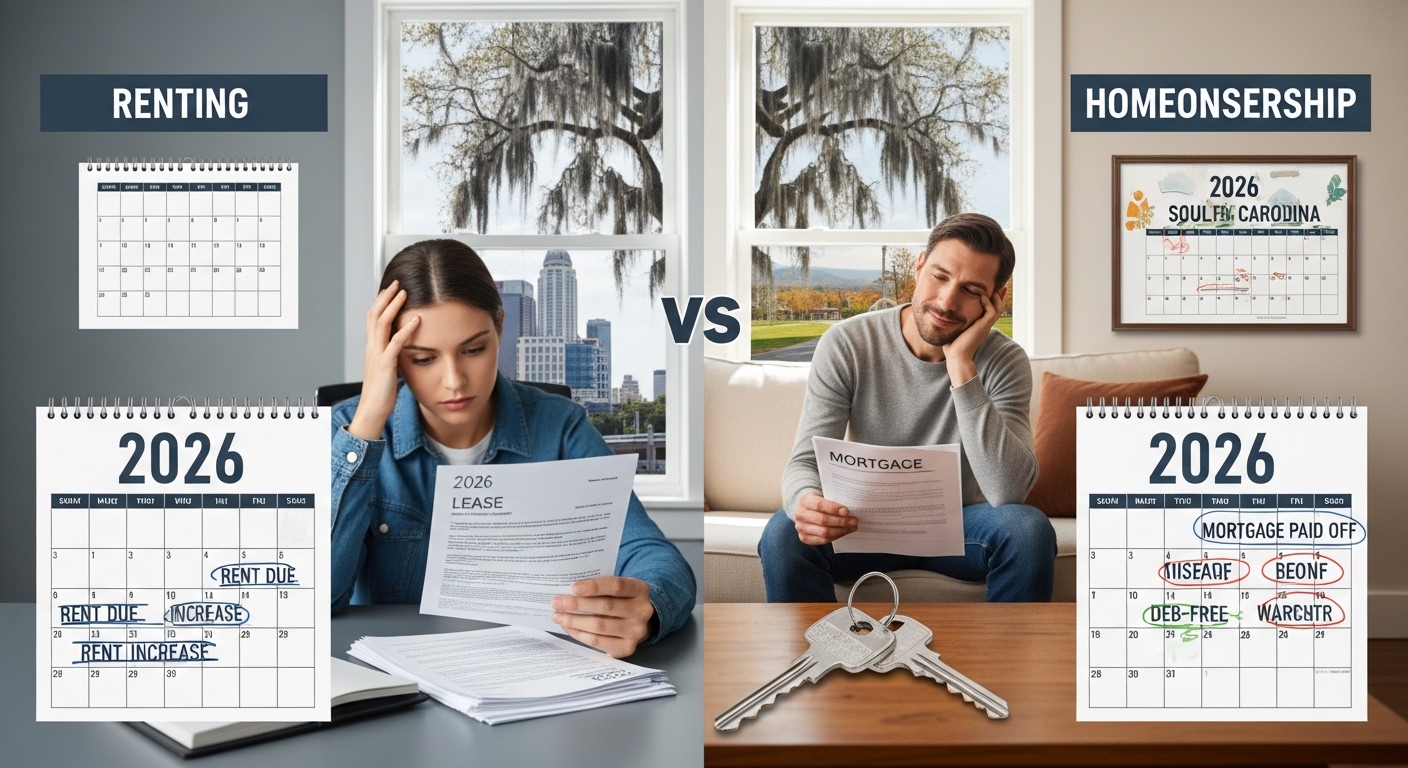
Buying a new home can feel overwhelming much like starting a new fitness regimen. Between understanding the financial aspects of your mortgage and navigating the paperwork, it's easy to feel lost. But just as you wouldn't embark on a fitness journey without a plan, you shouldn't dive into homeownership without understanding the key components that will affect your financial health.
I've worked with hundreds of homebuyers in Easley, South Carolina, and I can tell you that the single biggest mistake people make is assuming their mortgage payment is just the monthly principal and interest amount they see online. That's only part of the picture. The true cost of homeownership includes several moving parts, and understanding each one will set you up for success.
The Real Cost of Your Monthly Payment
Let me share what I discovered working with a first-time buyer last year. She was approved for a $400,000 loan and thought her monthly payment would be around $2,000 based on the interest rate she found. When we calculated her actual monthly payment including all the costs, the real number was much higher: closer to $3,247. That's because property taxes, insurance, and PMI factored into the real monthly cost.
Your monthly housing payment consists of four main components, often called PITI:
- Principal and Interest: This is the amount that goes toward actually paying off your loan and the interest your lender charges. On a $400,000 loan at around 6.4%, your monthly principal and interest payment is roughly $2,000.
- Property Taxes: On a $350,000 home with a 1.2% property tax rate, you pay $4,200 annually or $350 monthly, and that $350 gets added to your monthly mortgage payment and held in escrow. Your local government determines your property tax rate, so this varies significantly by location.
- Homeowners Insurance: According to the National Association of Insurance Commissioners, average homeowners insurance costs around $1,400 annually, or about $117 per month, but this varies significantly by location, home value, and local risk factors. In South Carolina, you may see rates comparable to or slightly lower than the national average.
- Private Mortgage Insurance (PMI): If you're putting down less than 20%, your lender will require PMI. PMI generally costs an average of 0.46% to 1.50% of your loan amount annually. This is an important number to understand, as it can add several hundred dollars to your monthly payment.
The Interest Rate Factor: Small Changes, Big Impact
If there's one component I want you to focus on, it's your interest rate. The difference between getting a 6% rate and a 7% rate might not sound dramatic, but the impact on your wallet is substantial. Moving from 6% to 7% increases your payment by $231 monthly, and over 30 years, you pay an extra $83,160 in interest.
The average mortgage interest rate on a 30-year mortgage is 6.50% as of June 8, 2026. If you're shopping for rates, remember that even a small difference can mean thousands of dollars over the life of your loan. This is why I always recommend getting pre-approved and shopping around with multiple lenders. You might be surprised at the variation you'll find.
Down Payment: More Than Just Meeting the Minimum
You've probably heard that you need 20% down to buy a home. Here's the truth: that's not required anymore. The National Association of Realtors says that the average down payment for first-time home buyers in 2025 will be only 8%. Many first-time buyers pay less, especially if they qualify for government-backed loans (FHA, VA, or USDA) that allow as little as 3-5%.
However, putting down less does come with a cost. Putting 20% down versus 3.5% down saves you $600 per month, but that requires an extra $57,750 upfront. The decision really depends on your financial situation. I always encourage buyers to think about whether they can comfortably afford a larger down payment without draining their emergency fund.
All the Costs You Might Forget
Beyond your monthly payment, there are several one-time costs you'll encounter at closing and shortly after. According to Bankrate, first-time home buyers typically underestimate their total costs by 25-40%, which can derail the entire transaction or leave families financially vulnerable right after closing.
Your closing costs alone can be substantial. Closing costs include all the fees required to finalize your home purchase and can add up to 2% to 5% of the home price. On a $300,000 home, that could mean anywhere from $6,000 to $15,000 in closing costs.
Then there are the costs many buyers overlook:
- Moving can cost anywhere from a few hundred dollars for DIY truck rental to several thousand for full-service movers, and families moving long distances may spend significantly more.
- Some utility providers charge activation or deposit fees when starting new service for electricity, gas, water, internet, or cable.
- Maintenance can be a lumpy expense, though it is not uncommon to cost between 1% to 4% of the property price annually.
Your Total Housing Budget and Affordability
Here's something critical that I share with every buyer I work with: just because you qualify for a certain loan amount doesn't mean you should take it. The U.S. Department of Housing and Urban Development recommends spending no more than 30% of your gross monthly earnings on housing expenses, which include mortgage payments, insurance, property taxes and utilities.
Let me put this in perspective. Most first-time home buyers need between $20,000 and $50,000 for a $250,000 home, including your down payment, which can be as low as 3% for a conventional loan or 0% for a VA or USDA loan, as well as closing costs that are usually 2-6% of the purchase price, moving costs, inspections, and an emergency fund.
Tools to Help You Plan
Before you start scrolling through home listings, take time to calculate your actual budget. Sit down and run the numbers by calculating what you can truly afford, factoring in your actual property taxes, insurance costs, and any HOA fees, and adding your expected maintenance costs so that number should feel comfortable, not suffocating.
Use mortgage calculators to run different scenarios. What if rates go up by 0.5%? What if you put down 10% instead of 15%? What if you choose a 15-year mortgage instead of 30? If the payment feels like a stretch, consider taking it for a financial test drive by putting the difference between your current rent and this projected mortgage payment into a savings account for three months to see if you can live comfortably without that cash.
I always recommend using HOUSEJET to search for homes in your price range and to get a feel for what's available in the Easley market. Once you know what types of homes you're interested in, you can use those actual property tax rates and insurance estimates for your area to calculate more accurate numbers.
The Easley Advantage
One of the reasons I love helping buyers in Easley is that our South Carolina market offers more affordability than many areas of the country. Your property tax rates are reasonable, insurance costs are manageable, and you can find quality homes without the astronomical prices you'd see in larger metros. This is where understanding your true monthly payment becomes even more powerful, because the numbers often work in your favor here.
Your Next Steps
Understanding your mortgage payment is the foundation of confident home shopping. You'll know exactly what you can afford. You'll know what you're committing to for the next 15 or 30 years. You'll have room left over for retirement savings, emergency fund contributions, and actually enjoying your life.
If you're ready to start your homeownership journey in Easley, I'm here to help. We can walk through your specific numbers, talk about what different loan programs might offer you, and find homes that fit both your dreams and your budget. The planning phase might not be as exciting as touring houses, but it's where smart buyers win.
Reach out to me at Samantha Jenkins, and let's build your homeownership plan together. You can also visit my website to start exploring homes in Easley while you prepare your finances.